
The Boundaries of PoSH: Why an Internal Committee Cannot Punish General Misconduct
In the modern workplace, the lines between “annoying behavior,” “indiscipline,” and “sexual harassment” can often feel blurred. For Internal Committees (ICs) and HR departments, the temptation to use a PoSH inquiry to address general workplace toxicity is high.
However, a landmark ruling by the Bombay High Court in Dr. Mohinder Kumar vs. The Chairman, NABARD (Writ Petition No. 1635 of 2021) has sent a clear message: The jurisdiction of an Internal Committee is not absolute.
If you are an IC member or an HR professional, this case is a vital “what-not-to-do” guide.
The Conflict: “Giggling and Singing” vs. Secret Videography
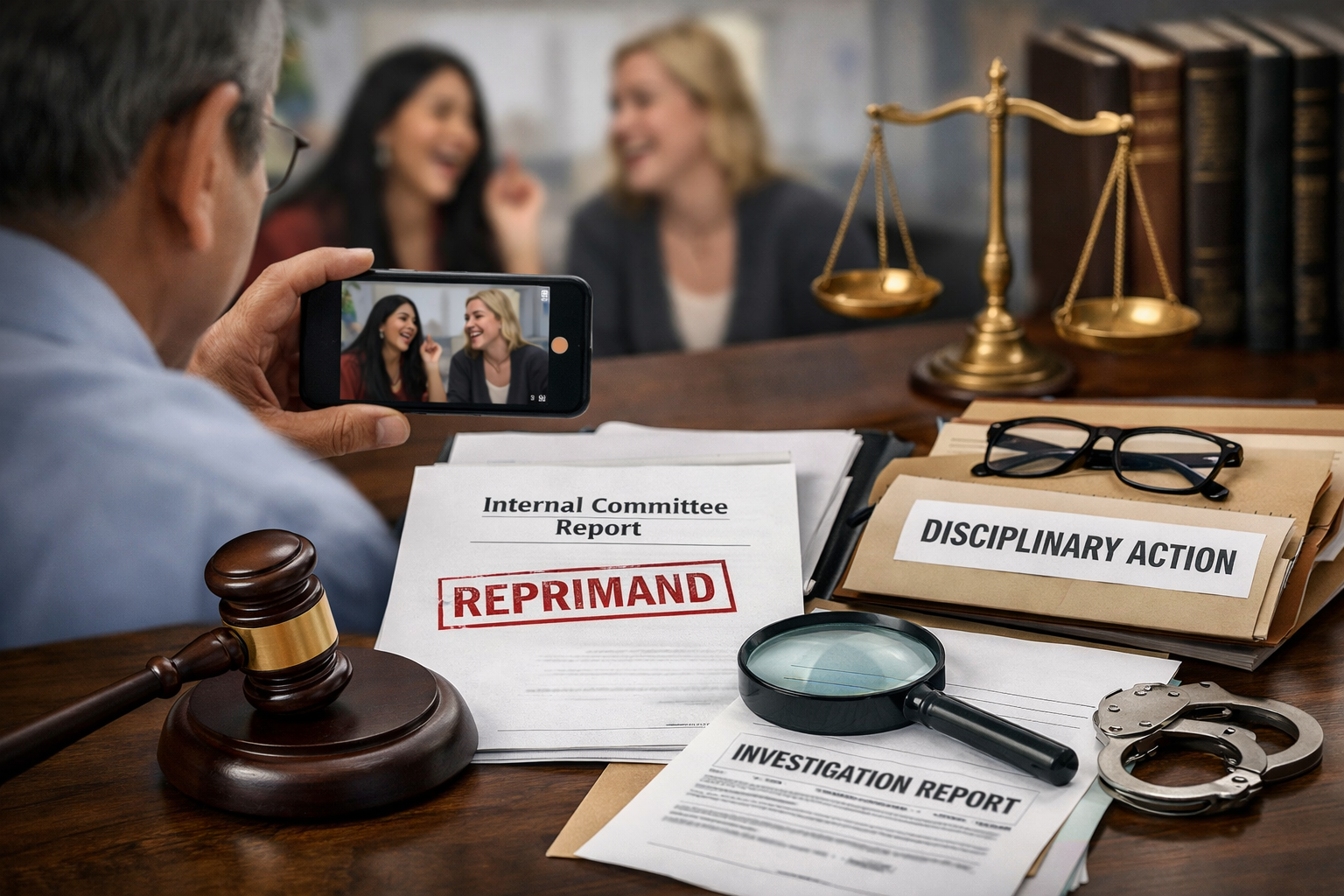
The case began with a unique workplace dispute. Dr. Mohinder Kumar, an Assistant General Manager at NABARD, claimed his concentration on complex research was being shattered by the “loud talking, giggling, and singing” of female colleagues in his department.
Feeling ignored by management, Dr. Kumar took matters into his own hands. He began using his mobile phone to videograph the female staff, claiming he was merely “collecting evidence” of the disturbance to show his superiors.
The female employees, however, saw it differently. They filed a complaint with the Central Complaints Committee (CCC)—the organization’s body for handling sexual harassment—alleging that his staring and recording created a hostile and intimidating environment.
The Investigation: A Jurisdictional Overreach
The CCC conducted a thorough inquiry. Their findings were unexpected:
- Exoneration: The Committee concluded that Dr. Kumar’s actions did not constitute “sexual harassment” as defined under the PoSH Act or the Bank’s Service Rules. They found no “sexually determined behavior” or sexual intent.
- The Penalty Recommendation: Despite finding him innocent of sexual harassment, the Committee felt his conduct was “objectionable” and “intolerable.” They recommended that the Bank take “suitable action” against him for his “unbecoming” conduct.
Acting on this recommendation, NABARD issued a penalty of “Reprimand” and later, following further disputes, the petitioner faced compulsory retirement.
The High Court Intervenes: The Power of Section 13(2)
Dr. Kumar challenged the penalty in the Bombay High Court. The Court’s judgment, delivered on January 12, 2026, serves as a masterclass in the legal limits of the PoSH Act.
The Court quashed the penalty based on three critical legal pillars:
1. The “Functus Officio” Rule
The Court held that the moment the CCC/IC concluded that the allegations of sexual harassment were not proved, its legal authority (jurisdiction) ended. Under Section 13(2) of the PoSH Act, if an allegation is not proved, the Committee has only one legal path: Recommend to the employer that no action is required.
2. The IC is Not a “Catch-All” Disciplinary Body
The Judges noted that an Internal Committee is a specialized body created for a specific purpose. It cannot pivot and become a general disciplinary committee. If the IC finds that a respondent is “rude” or “unprofessional” but not “sexually harassing,” it cannot recommend punishment for that rudeness.
3. The Requirement of a Fresh Inquiry
The Court clarified that if an employer wants to punish an employee for “general indiscipline” or “disturbing office peace,” they cannot “piggyback” on a PoSH report. To punish Dr. Kumar for videography, the Bank should have:
- Issued a separate Show Cause Notice under the General Staff Rules.
- Conducted a separate disciplinary inquiry where the employee could defend himself against the specific charge of “indiscipline.”
Key Takeaways for Organizations
This judgment highlights the high stakes of procedural errors. By following an invalid IC recommendation, NABARD’s disciplinary action was rendered illegal from the start.
For HR Leaders: If your IC finds “bad behavior” but “no sexual harassment,” do not issue a punishment based on that report. Instead, close the PoSH case and, if necessary, initiate a fresh, independent disciplinary process under your company’s Code of Conduct.
For IC Members: Your report must stick strictly to the definition of sexual harassment. If the evidence doesn’t meet the threshold of the PoSH Act, your recommendation must be “No Action,” regardless of how “objectionable” you find the respondent’s general behavior.
Is Your IC Legally Compliant?
The NABARD case proves that even a well-intentioned IC can lead an organization into a legal minefield. At Rainmaker, we specialize in bulletproofing your PoSH processes through:
- Expert IC Training: Ensuring your members understand the limits of their jurisdiction.
- External Member Support: Providing legal clarity during complex inquiries.
- Compliance Audits: Reviewing your policies to ensure they align with the latest High Court and Supreme Court rulings.
Don’t wait for a legal challenge to find the gaps in your process.
Click here to learn more about Rainmaker’s PoSH Advisory Services or contact us directly at [email protected]/+91 90290 00180 to schedule a consultation.