
DEIB in Indian Workplaces: FY 26-27 Inclusion Calendar & Guide
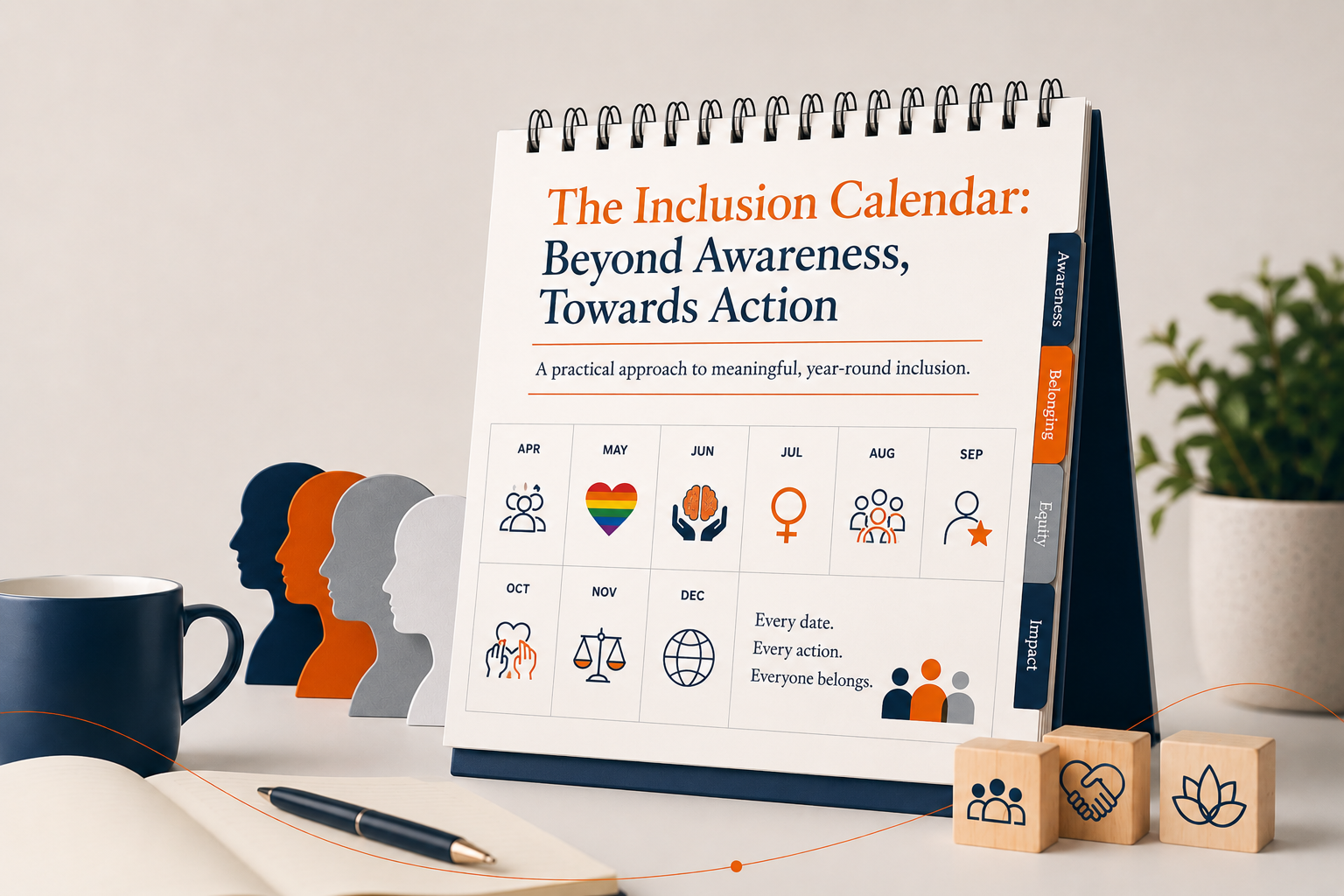
At Rainmaker, we know that as the new financial year kicks off in April 2026, HR folders are filling up with budget sheets and headcount goals. But tucked between those spreadsheets is a question we often ask ourselves: how do we make this the year that inclusion actually sticks?
Starting a DEIB (Diversity, Equity, Inclusion, and Belonging) plan shouldn’t feel like adding another heavy suitcase to your luggage. It should feel like finally finding a pair of shoes that actually fits everyone. Here are the questions we’ve been hearing in the hallways.
Does a new financial year mean we have to reinvent the whole inclusion wheel?
There is a certain pressure every April to come up with a “bigger and better” strategy than last year. We feel like if we aren’t launching a massive new movement, we aren’t doing enough.
We once saw a team spend three months building a complex “Inclusion Matrix” with 40 different metrics. By the time it was ready, the team was too exhausted to actually talk to each other. The insight here is that DEIB isn’t about novelty. It’s about consistency. Most people don’t want a brand-new “initiative”—they just want to feel heard in their Monday morning stand-ups.
The Reframe: Instead of reinventing the wheel, think of this year as balancing the alignment. It’s about making sure the inclusive habits you started last year are actually running smoothly in the daily grind.
Is celebrating Pride in India different from what we see on global social media?
When June arrives, it’s tempting to hit “copy-paste” on global templates. But in our local context, the conversation around identity often has its own unique rhythm and nuances.
At a previous town hall, a company used a generic global video that felt a bit “off” to the local team—it didn’t reflect their lived realities or the specific legal and social landscape of India. The insight is that Pride is about belonging, and belonging is always local. It’s about creating a space where a colleague feels safe to bring their partner to the office Diwali party, not just putting a rainbow on the LinkedIn logo.
The Reframe: View Pride Month in India as an opportunity for “Local Listening.” It’s less about global slogans and more about the quiet, supportive conversations happening in our own breakrooms.
How do we mark Sign Language Day without it feeling like a ‘performance’?
There’s often a fear that celebrating the International Day of Sign Language can feel like we’re just “ticking a box” for a day and then forgetting about accessibility for the rest of the year.
We remember an office that hired an interpreter for one big event, but the rest of the year, their internal videos didn’t even have captions. It felt a bit like putting out a welcome mat but keeping the door locked. The insight is that visibility is the first step toward accessibility. Celebrating the day is a signal that we recognize a different way of experiencing the world.
The Reframe: Think of this day as an Accessibility Audit in miniature.
Pause and ask: Are our systems inclusive by design, or only inclusive when we are being watched?
Can we talk about Mental Health Day without making it awkward?
Mental health is a topic everyone knows is important, yet when the day comes, there’s a collective “What do we actually say?” shuffle. We worry that if we bring it up, we’re asking people to share things they’d rather keep private.
At one firm, the leadership shared their own “stress-management fails” during a coffee break. It wasn’t a formal speech – just a leader admitting they sometimes get overwhelmed by their inbox. That simple moment did more for the culture than any “Wellness Wednesday” email ever could. It gave everyone else permission to be human.
The Reframe: Mental Health Day isn’t about fixing people. It’s about lowering the “bravery bar”—making it so that people don’t have to be incredibly brave just to say they need a break.
Why do we have both Women’s Day and Gender Equality Day?
It can feel like we’re repeating ourselves. “Didn’t we just celebrate this in March?” is a common (if whispered) question when August 26th rolls around.
Think of it like a birthday versus a performance review. Women’s Day is a celebration of the journey and the people. Gender Equality Day is a look at the system—the infrastructure of the workplace. We’ve seen teams celebrate women with lunch in March, but then use Gender Equality Day in August to look at why their leadership pipeline still looks a bit one-sided.
The Reframe: Use March to celebrate the “Who” and August to examine the “How.” One honors the people, the other honors the promise of fairness.
Your FY 2026-27 DEIB Milestone Chart
To help you plan, we’ve put together a roadmap of key dates with ideas that go beyond the usual workshop format.
| Month | Key Date | Observance | Celebration Idea (Beyond Workshops) |
| June 2026 | June 1-30 | Pride Month | The “Allyship Bookshelf”: Curate a physical or digital library of queer literature and film by Indian authors/creators. |
| August 2026 | Aug 26 | Gender Equality Day | “Bias-Free Coffee”: Small groups meet to discuss one micro-habit (like who takes notes in meetings) they want to change. |
| Sept 2026 | Sept 23 | International Day of Sign Languages | The Silent Challenge: Encourage teams to complete a 15-minute task using only visual communication/gestures to spark empathy. |
| Oct 2026 | Oct 10 | World Mental Health Day | Email Sunset: A company-wide agreement to have zero internal emails sent after 7 PM for the entire week. |
| Dec 2026 | Dec 3 | International Day of Persons with Disabilities | Digital Audit: Teams spend an hour checking if their internal documents are screen-reader friendly. |
| March 2027 | March 8 | International Women’s Day | Future-Me Mentoring: Junior women interview senior leaders about their career pivots over an informal lunch. |
What if we don’t get it “perfect” this year?
This is the most important thing to remember as we start FY 2026-27. Culture isn’t a project with a “Done” state. It’s more like a garden—some things will bloom beautifully, and some might need a bit more fertilizer next season.
At Rainmaker, we believe the goal isn’t to be a perfect organization by March 2027. The goal is simply to be a more thoughtful one than we were in April 2026.
Need help turning these dates into daily habits? Rainmaker’s customized workshops and product packages are designed to help workplaces build lasting cultures of everyday inclusion. Connect with us to map out your FY 2026-27 DEIB strategy today.
Further Reading
- Let’s Talk: Why Mental Health in the Workplace Deserves Centre Stage in India
- The Silent Weight: Unraveling India’s Gender Equality Paradox
- Part 1: Understanding Mental Health in the Workplace: A Path to Wellbeing
- Part 2: How Companies Can Support Mental Health in the Workplace
- Building an Inclusive Workplace: How DEIB Training Transforms Organisational Culture
- From Maternity Leave to Career Comeback: Addressing the Motherhood Challenge
- Breaking the Glass Ceiling: Empowering Women for Corporate Leadership
- Disability and Inclusion in the Workplace: Challenges and Solutions